Thursday, June 14, 2012

Aung San Suu Kyi addressed at the 101st International Labour Conference


Burmese democracy icon and Nobel Peace prize winner, Aung San Suu Kyi, visited Switzerland on June 14,2012.During her visit, she addressed at the 101st International Labour Conference in Geneva as follow:
 

 Source: ILO.ORG. 


Statement | 14 June 2012
The welcome that I have received this morning has forced me to move a little away from my prepared text, with apologies to interpreters.


Mr President of the Conference, Director-General, distinguished delegates, ladies and gentlemen, before I start on my prepared address, I would like to thank you all for this totally unexpected very warm welcome. It has moved me profoundly and I hope that in the future we shall be able to work together to build a world where all of us can move closer to one another.

I was saying to Mr Somavia – he just told me how to pronounce his name correctly – I was saying to Mr Somavia that whenever I meet people from South America I feel as though I were meeting members of my own family because we have been through the same experiences, our countries. But I think this applies to many other countries besides the ones in South America. So coming here, it feels as though I have come back to meet long lost members of my family and I hope that this will, by no means, be the last meeting.

I am one of those countless people whose lives are impacted by labour issues."
The International Labour Conference is a pioneer and an example of inclusiveness. Delegates of Workers and Employers as well as Governments coming together to find effective solutions to complex problems demonstrate the value of meaningful exchange between relevant stakeholders. However, I do not stand here as a representative of Workers or of Employers or of Government, not yet anyway. Perhaps you could accept me as the fourth element, I am one of those countless people whose lives are impacted by labour issues. I am also a politician so perhaps I could make a claim to be the fifth element as well, the element that represents the interests of the general public. I still feel a little self-conscious about referring to myself as a recently elected member of Parliament, which I presume is the correct formal definition of my status.

Myanmar's pro-democracy leader Aung San Suu Kyi signs autographs outside the Swiss Parliament in Bern June 14, 2012. Myanmar prisoner-turned-parliamentarian Aung San Suu Kyi began a tour of Europe almost certain to attract the kind of fanfare that will...
Photo: Reuters

Wednesday, June 6, 2012

Kyaw Thu's Triumph of Art Exhibition in New York City


"Security = Warmth" (36 x 40, acrylic on canvas) 
 A Burmese well-respected philanthropist & actor, Kyaw Thu, had a triumph of art exhibition in New York City over the Memorial Day weekend. Traveling from Burma, a place more than 8000 miles away from New York City, Kyaw Thu’s paintings carry colorful stories to be revealed. Some paintings represent Burmese’s culture, some speak about the artist’s desire for freedom & peace, and other reflects the history of revolutions that took place in Burma. 

In the Project Reach's room filled with Burmeses and Americans from different background, I could feel the creator’s pain, sadness and happiness through his paintings. Yes...Kyaw Thu’s paintings rock.
Kyaw Thu with his paintings
The artist named his solo show as First Break Out.
“I have been denied all rights to artistic creation in Myanmar since September 2007, when I offered alms and water to monks walking in peaceful protest and reciting prayers of love during the Saffron Revolution, all the way to my current visit to the United States. I would like to call it the first breakout, the first artistic expressions from the heart, to be able to publicly exhibit the heartfelt works I have painted during my visit to America,” Kyaw Thu said in his opening speech. 

"War and Peace"  (36 x 24, mixed media ) 
 

Colors from paintings are reflections of life. Similar to his paintings, the artist’s life is painted with colorful experiences. He is one of Burma’s best-known actors/directors (two times Burmese Academy Award winner). Besides his acting career, Kyaw Thu is the founder of the Free Funeral Services Society, an organization that provides free funeral services, free medical services, free library and free education to the poor. 

He also played a prominent role in relief projects in response to natural disasters such as Cyclone Nargis. As much as he is loved by the poor, he was oppressed by the military government. His films and paintings were banned in Burma. “An actor’s life is meaningless if he is not allowed to act,” Kyaw Thu said in one of his interviews with the media. Moreover, he and his wife were arrested for supporting the protesting monks in September Saffron Revolution in 2007. Regardless of challenges, they both continue to provide social services to less fortunate people. 

Sunday, June 3, 2012

Burmese Democracy Leader Addressed the World Economic Forum


Video of Aung San Suu Kyi's speech at 2012 World Economic Forum

Nobel Peace Prize winner Aung San Suu Kyi, the Burmese democracy leader, has addressed the World Economic Forum in Bangkok on June 01, 2012.
 
More than 60 million of people have been kept in silent for decades in Burma. I am so proud of our leader to be able to speak for her citizens. As she spoke from her heart, she was not only inspired by her audience in the room but also by people around the world.
"Human values are the same everywhere"  (Aung San Suu Kyi)

Saturday, May 26, 2012

A Shan Who Shares And Cares


When we meet with people who are in need, some of us may think, " What will happen to me if i help this person?" Others may think: "What will happen to him/her if i don't help?"This article is about a man who chooses the second type of question and delivers love & help to those who are in need.

Sai Htwe, a medical doctor from Burma who is currently living in the United States, often travels to Thai-Burma border and China-Burma border to support refugees. Majority of these refugees are from ethnic tribes. They have become victims of human right violations such as rapes,forced relocation, tortures and killings, committed by its own government. Although they have done nothing wrong or against the government, the reason behind all these human right violations is only because of their identities. The fact that they are from minorities is good enough to be forced to relocate according to the  government's ethnic cleansing policy. Sadly enough, most of them are women and children. 

Sai's activities in brief:  
  • Volunteer Missionary Medical Doctor. 
  • Daily Gospel Radio Broadcasting from FEBC, Philippines, one hour daily in Shan language, since 1989 to present. 
  • Producing Gospel in Shan language broadcasting from Thoed Thai Cable TV daily in Thailand.
  • Book Written: "History of Shan Churches in Burma 1861-2001"
    "Christian Discipleship in New Testament Perspective" in three languages.
    "New testament in new Shan writing"

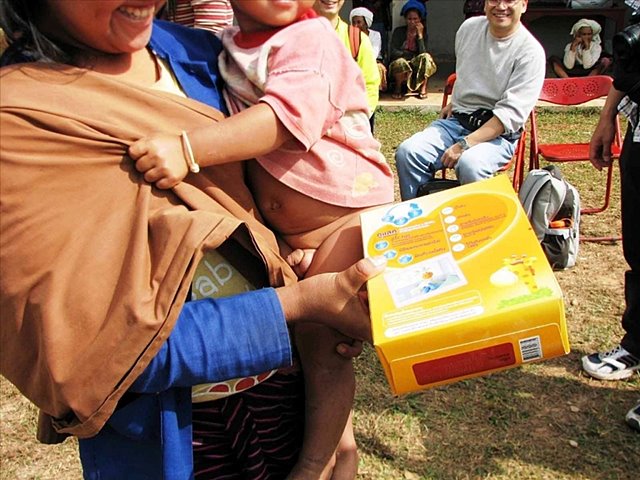
Giving blankets and milk powder to women and children.

Being a Shan, one of the minorities in Burma, Sai  can not ignore the sufferings of his people. He uses the teaching of Jesus Christ ( to love others, to help those who are in need of help, to care for the sick and feed the poor) as a motivation in doing these good deeds. I have got a chance to interview Sai as follows:

Could you please briefly explain about your project/ group's activities?
Sai: I have found Shan Missions in 1994. Our main project is to assist the Shan, especially refugee camp in Loi Kaw Wan at Thai-Burma border. The team members of our missions are all volunteers. Our group travel to the refugee camps distributing basic needs to free health care. We donate rice, foods, clothes, water, blankets to elderly, milk powders and note books for children, health education talks at schools, free medical and dental care. 

 Who are the targeted populations?
Sai: Our target groups are refugees of all ages. We have been helping Shan refugees since 2003. We extend our help to Kachin refugees this year. 

The Clinic at Na Nawang Pa Kachin Refugee Camp (photo: Sai Htwe)

Among your activities, which one is your favorite? Why?
Sai: Providing medical service is my favorite. It is the most important service to the sick people, especially as these refugees have no chance of seeing doctor to get proper treatment. I enjoy serving for them. 

What are the challenges?
Sai: There are may challenges but nothing can stop me of helping them. They live in areas with limited access to transportation and i have to walk or use any type of transportation available to reach them. Some areas are dangerous to travel. During my 9 years of services to them, i have overcome all challenges.
The mobile free clinic at a Refugee camp in China
Where did you get the support from (from organization or from individuals’ donation)?
Sai: Well, our group receives support in different forms; physical, material, spiritual and financial. Some of my friends physically join me in my trip.Some generous donors contributed foods and materials. In terms of spiritual, family and churches are praying for us. We all are volunteers and we have to pay for our own trips. At times we also got some financial support from friends and churches to buy medicine and other things we need.

Being a person who gets a chance to witness the differences between a democracy country like the USA and the country ruled by a dictatorship like Burma, what come across your mind first?
Sai: All human beings should enjoy their lives and freedom. In a democratic country like America, people have all rights to enjoy their freedom.But in a dictatorial country like Burma, its citizens have to live under FEAR all the time. They have no freedom at all, no human right and no joy at all. 

You have been to refugee camps many times. Do you think there are some progresses there? If no, what do you think need to be done?
Sai: There have been some improvements in refugee camps. They get some support for education, health care and basic needs to live. However, they still need to know how to survive without outside help. They need to learn how to be self-supported.I believe the most important thing is to have a good management/administrative system there. They need good leadership and administer the camps properly.


 What is your future plan?
Sai:  My future plan is to continue helping those who are in need of help. I will try to make myself available for the service to the poor and needy 24/7.

What is your message to Burmese/ Shans living overseas?
Sai: Whether you are a refugee or a student or a person from any working classe, don't forget your mother land. Try your best to help and maintain the culture. God has created us and the land for us. We have to try our best to bring peace and work for the betterment of our country. 

What is your message to Shans living inside Burma? 
Sai: Always remember you are Shan. Try your best to protect Shan culture and identities from extinction. Speak in Shan language and learn to write in Shan. Unity is very important. Cooperate and unite with each other. Don't forget, our land SHAN STATE is the largest state in Burma and full of natural resources. This is a RICH LAND.
                                                                                    
Provide Health education at a high school
No desk, as long as they have something to put on their books, they are ready to learn.

 Giving milk powders to babies and children at Shan refugee camp. Sharing your blessings to unfortunate and poor people is the most enjoyable act of love. 


Sai Htwe with Shan musical instruments (long drum is a very unique musical instrument for Shan people) 

If you are interested to support, please contact Sai at:  saihtwe@shan-missions.com 
My sincere thanks to Sai Htwe for this interview and photos.
                                                                                        littlevoicefromburma 

Demonstrations over electricity shortages in Burma


I have grown up in a small village of Burma where there was no electricity or internet connection. So, when i first visited New York's Times Square where the night is as bright as day light, i was so amazed by the colorful electricity. I wanted to showed it to all my friends from the village who have never been living with 24 hrs of electricity (or) some have never had electricity in their lives. At the same time, I sadly realized that my country has left behind in all aspects; education, health care, human rights and living standards etc.


At this time, demonstrations over electricity shortages began in the 2nd largest city of Burma,Mandarlay, on May 20 and quickly spread to several towns and cities. Kyaw Thu, the winner for Burmese Citizenship Award for his social services to the poor, held a small peaceful demonstration in New York City to support the Burma's candle campaign. Kyaw Thu is a famous actor, film director, an artist and the founder of the Free Funeral Service Society that provides free funeral services and health care to the poor. On his short trip to the USA, Kyaw Thu has met with Burmese communities from different cities.


Please support Burma/ Myanmar to transform into a democratic country by spreading the news about the country. 


Kyaw Thu participated in peaceful Candle campaign at Project Reach, New York City  (photo: littlevoicefromburma)


Burmeses living in NYC also particiapted in the Candle campaign (photo: littlevoicefromburma)


Citizens marching inside Burma in a Candle Campaign  (photo: The Myanmar Times )
 
Citizens marching inside Burma in a Candle Campaign (photo: The Myanmar Times)


Protesting for the next generations to get 24 hrs electricity supply in Burma (photo: facebook)
The desire to get 24 hrs electricity is burning inside and he could not even feel the burnt on his hand. (Photo: Myo Min Oo )
Photo: The Myanmar Times

Saturday, March 10, 2012

A Burmese woman won 2012 International Women of Courage Award

The US secretary of State, First Lady and 2012 International Women of Courage Award Winners(source:state.gov)
Zin Mar Aung, a Burmese activist for women’s rights, received the International Women of Courage Award from U.S. Secretary of State Hillary Clinton in Washington, D.C on March 08,2012.


During the ceremony for the award, Mrs.Clinton states:


Eleven years in a Burmese prison could not silence Zin Mar Aung.  Her life’s work has been promoting democracy, women’s rights, and conflict resolution in Burma.  Today, she leads a self-help association for female ex-political prisoners as well as a school of political science.  Her efforts have allowed former prisoners to take advantage of rebuilding their lives, even when her activism jeopardized her own freedom.  She continues to raise awareness of issues affecting ethnic minorities in this evolving environment for civil society and democracy activists.

Saturday, March 3, 2012

Burma's Steel Lady meets with her supporters during her election campaigns

Burmese's democracy leader, Aung San Suu Kyi, is currently visiting the second largest city of Burma (Mandalay) and meeting with her supporters. More than 100,000 supporters including monks,nuns and people of different ages showed up to support her. 


According to my friend who accompanies Suu Kyi to all her trips: from humid regions to cold regions, the 66-year-old Nobel Peace Prize Laureate appeared tired especially when she is alone. "It is not easy to travel to different places and meeting with thousands and thousands of supporters. Every day, she is dealing with people from different background. She seems tired when she is alone but as soon as she meets her supporters, she becomes so fresh with a bright smile on her face and she is ready to deliver her speech," my friend said.  Suu Kyi has been campaigning around the country for months, in an attempt to win some seats in special election coming in April 2012. Majority of seats in Burma's parliament have been taken by government back-up party and only 48 seats are available at this time. 


Suu Kyi strongly believes that working in the Parliament is an important step for her to initiate Burma's reform.


"Our future road will be really tough and difficult. Democracy is not easy to get and also not easy to strengthen straight away,'' Suu Kyi says.


Aung San Suu Kyi meeting with her supporters in Mandalay, Burma